
FLEXIBLE SCREEN KIN

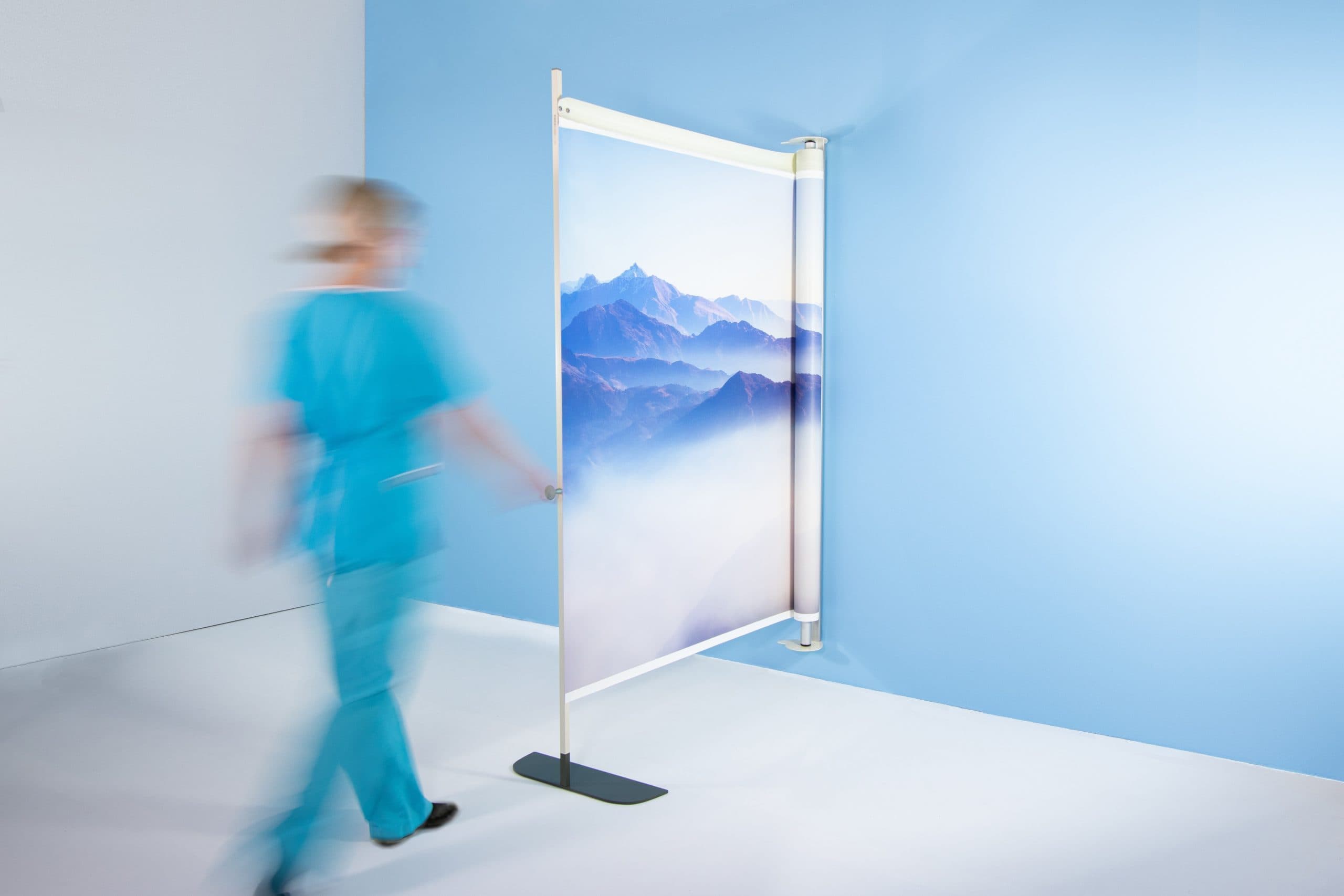
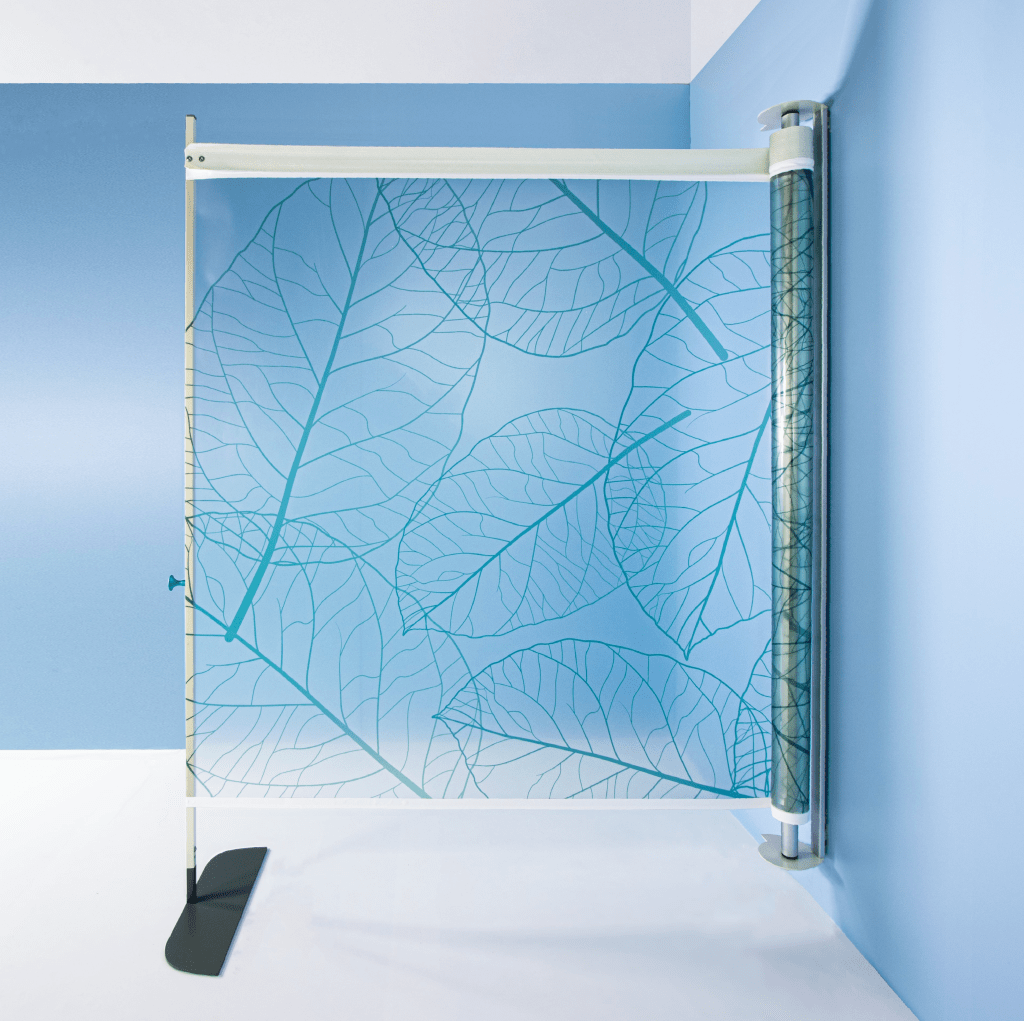
The discreet cinema screen, which is attached to the wall, is an elegant addition to any environment.
-
Customizable PVC screen, easy to wash and disinfect.
-
The narrow wall-mounted bracket is equipped with a self-closing mechanism with a click.
-
The Kin screen is self-supporting and, thanks to its extremely light frame weighing only 13 kg, does not need brakes.
-
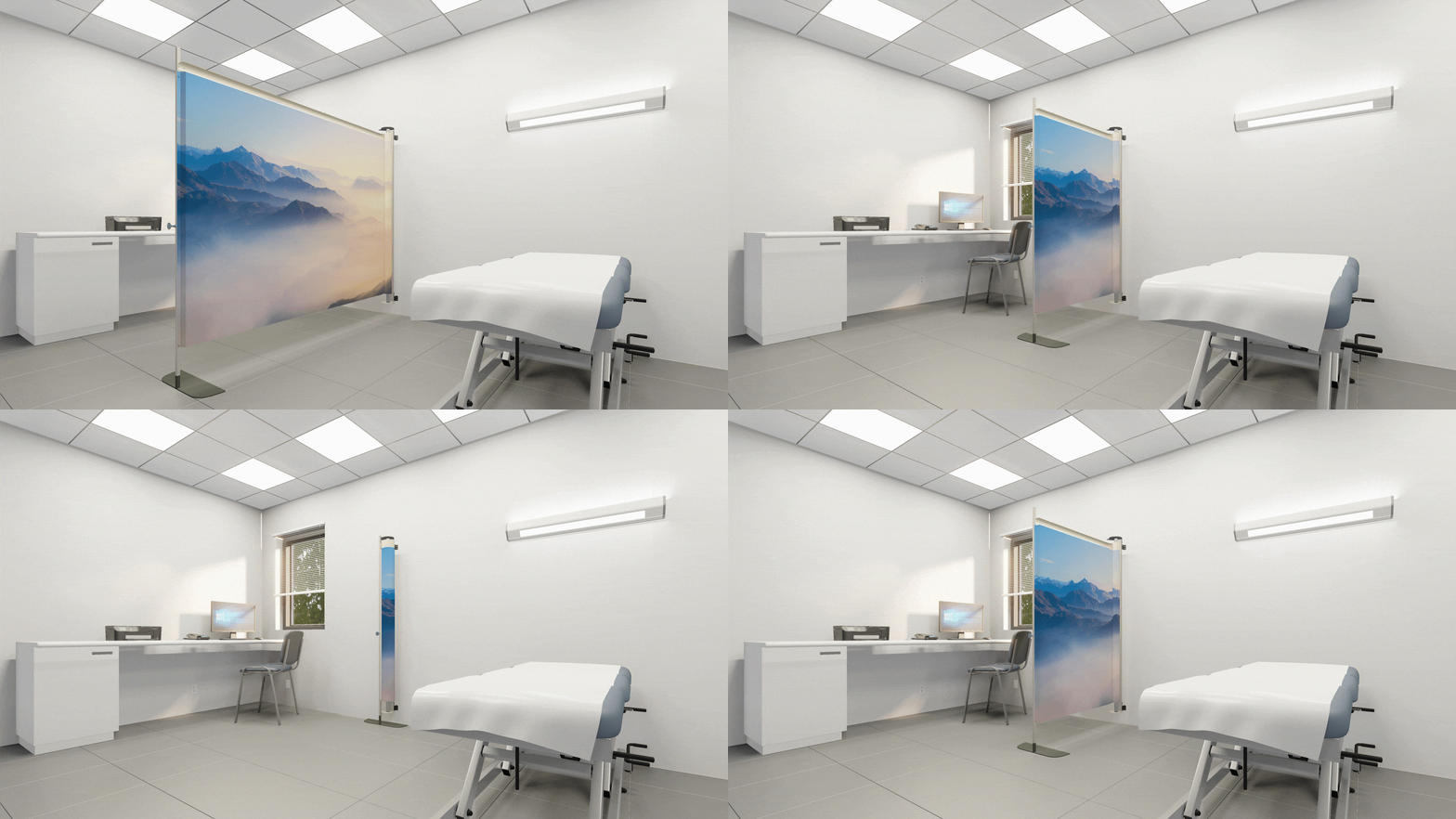
Fully extends up to 200 centimeters and folds back easily against the wall.
-
Ideal for spaces between beds or areas requiring privacy.
-
180° range of motion from fixed wall mount.
-
Discreet, compact, and stable construction.
KIN SCREEN - TECHNICAL PARAMETERS
-
Total height: 190 cm / 160 cm
-
Design variant: wall-mounted with swivel arm (180° range of motion)
-
Total depth of base before extension: 19 cm
-
Depth of flexible pull-out screen before extension: 10 cm
-
Total width after full extension: up to 200 cm
-
Mobile base dimensions: 50 x 15 cm
-
Main box weight: 10 kg
-
Screen types: transparent, white canvas
-
Printing: any design of your choice – full or partial print on white or transparent canvas
Body: powder-coated aluminum
Inner panel: polyester film (transparent version, PVC white canvas)
Base: steel plate
Wheels: fixed wall mount
EU & UK: EN13501-1: 2018 – Euroclass B - s1 - d0
US: ASTM E 84 - Class A
To ensure the long service life and optimal quality of flexible screens, we recommend regular use of the following disinfectants:
- Bacillol® 30 Sensitive Tissues 80 pcs
- Mikrozid® Sensitive wipes 220 pcs
- Desprej® Sensitive 500 ml
- Bacillol® 30 Sensitive Foam 750 ml
These products effectively remove unwanted microorganisms while helping to protect materials from damage, extending their functionality and aesthetic value.
We offer all suitable products in our range. You can order by phone, email, or from your sales representative.
We look forward to your order.
2-year warranty.
ADVANTAGES OF THE KIN SCREEN:
- The KIN screen serves as a room divider, providing privacy without the need for complicated structural modifications. Thanks to its design, it is also suitable for use in places where mobile or ceiling systems cannot be used.
- The sliding screen also allows for a quick response to changing care needs – for example, during examinations, hygiene, or visits.
- As another option for wall screens, we offer the flexible AIR screen, which differs in both length and the bottom end of the swivel arm, where wheels are used instead of a platform.
Wall mounting – no floor rails or casters required.
Easy to unfold and fold – sliding system with side profile.
Durable and washable material – suitable for healthcare use.
Clean appearance and space saving.
Natural scenes, calming motifs, or photos of pets help reduce restlessness and confusion.
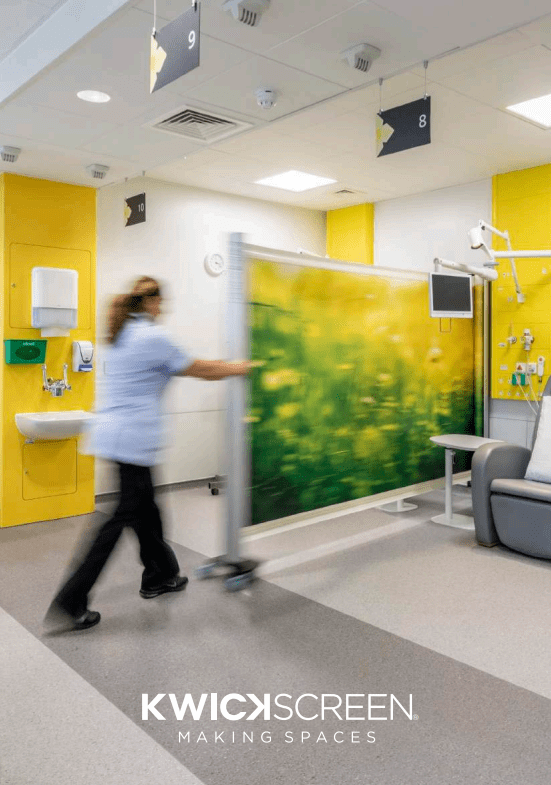
Thanks to its full mobility, easy disinfection, and storability, the screen increases space efficiency—the need to quickly and flexibly separate individual zones.
Complete catalog (PDF)
file size: 9.6 MB
Carefully selected images and photographs can have a huge impact on the quality of life of seniors with dementia and Alzheimer's disease.

The influence of photos and images on seniors (PDF)
file size: 8.2 MB
Choose the ideal print for your space, either full-surface or partial. Get inspired by the photos in our catalog, or use your own high-quality photo.
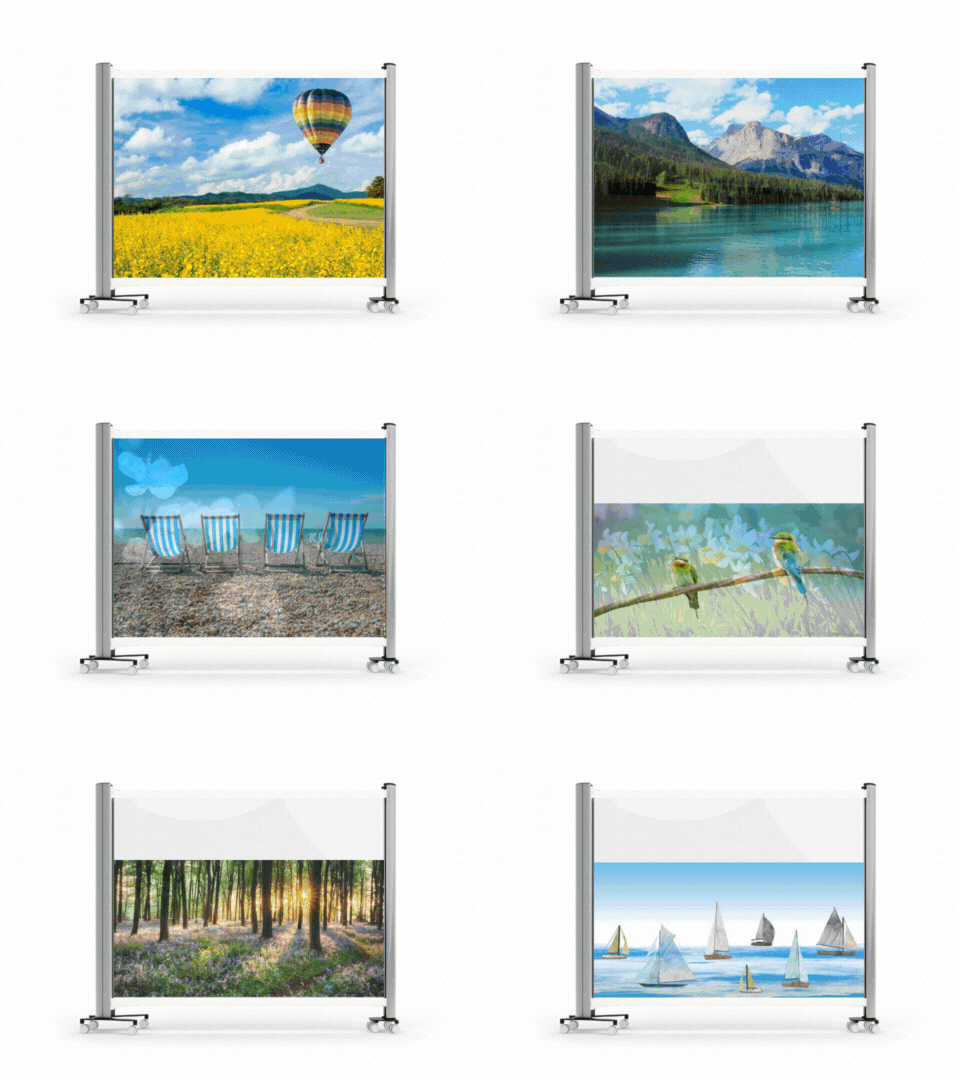
Print selection (PDF)
file size: 8.7 MB
If you need detailed technical specifications for KIN flexible screens.
KIN technical data sheets (PDF)
file size: 1.2 MB
IMPORTANT INFORMATION: The print may differ slightly from the graphic design. It is not possible to ensure a 1:1 print. When printing on both sides of the screen, one print may show through the other slightly in sunlight.
KIN SCREEN: FLEXIBLE PARTITION WALL FOR HEALTHCARE AND SOCIAL FACILITIES
The flexible KIN screen is a space-saving and elegant solution for separating rooms, beds, or work areas. This sliding partition wall is permanently installed on the wall and can be easily unfolded and folded as needed. It is ideal for use in hospitals, nursing homes, clinics, or other facilities where it is important to protect client privacy while keeping the space airy and functional.
The KIN screen is designed as a sliding partition wall that can be easily pulled out of the wall profile. When not in use, it can be easily folded back to save space in the room. Thanks to this system, KIN is a popular choice as a room divider for both bedrooms and treatment rooms or waiting rooms.
Showing photos of family or familiar objects can encourage conversation and connection with caregivers.