


FLEXIBle screens
Flexible screens are a modern, effective, and quick solution for partitioning spaces in hospitals, social services, clinics, and nursing homes. Thanks to their variability and easy installation, they help increase patient comfort, protect their privacy, and improve hygienic conditions.
Our screens for rooms and corridors are designed with an emphasis on practicality and cleanliness. They allow for flexible space division according to current needs—for example, during examinations, hygiene procedures, or visits.
FUNCTIONALITY | AESTHETICS | CLEANLINESS
EXPLORE OUR FLEXIBLE SCREEN MODELS AND DISCOVER THE DETAILS


FLEXIBILITY OF USE | ENVIRONMENTAL QUALITY | EASY MAINTENANCE

A game-changing solution is coming
Privacy, hygiene, and efficiency play a key role in modern social services. Traditional fabric screens, although long used, bring a number of problems, from high maintenance costs to health risks associated with their frequent replacement. A game-changing solution is coming – flexible screens, an innovative alternative that brings a number of benefits not only for clients but also for care staff.

Higher investment = lower operating costs
At first glance, purchasing flexible screens may seem like a higher investment than traditional screens, but when we look at the long-term costs, the advantages are clear. Fabric screens require regular replacement, cleaning, and maintenance, which means high operating costs. Flexible screens, however, only need to be wiped down with disinfectant. Flexible screens are sustainable in the long term – they are made from recycled aluminum and steel, can be fully recycled at the end of their life, and save energy and water because they do not require industrial washing.
Why choose Cleanlife flexible screens?
-
Easy installation – wall-mounted or free-standing design.
-
Hygienic materials – easy to wash and disinfect.
-
Space saving – take up minimal space when folded.
-
Flexibility – easy to adapt to the layout of the room.
From our range, you can choose, for example, wall screens that serve as sliding partitions or room dividers. Thanks to their telescopic construction, casters, or wall mounts, the screens can be placed exactly where you need them – without any permanent structural alterations.

Customized solutions for your space
Whether you are looking for a sliding partition wall for a hospital room, a mobile partition wall to separate beds, or a screen for a room to ensure privacy during treatment, we can provide you with a functional and proven solution. Our screens are available in a range of sizes, colors, and designs – we will be happy to advise you on the ideal option for your needs.

Privacy protection comes first
Flexible screens are revolutionizing privacy, hygiene, and efficiency, and not just in social services. They are cost-effective, environmentally friendly, and adaptable to any environment. Whether in a retirement home, rehabilitation center, or hospital, these screens will make the space safer, more practical, and more visually appealing.
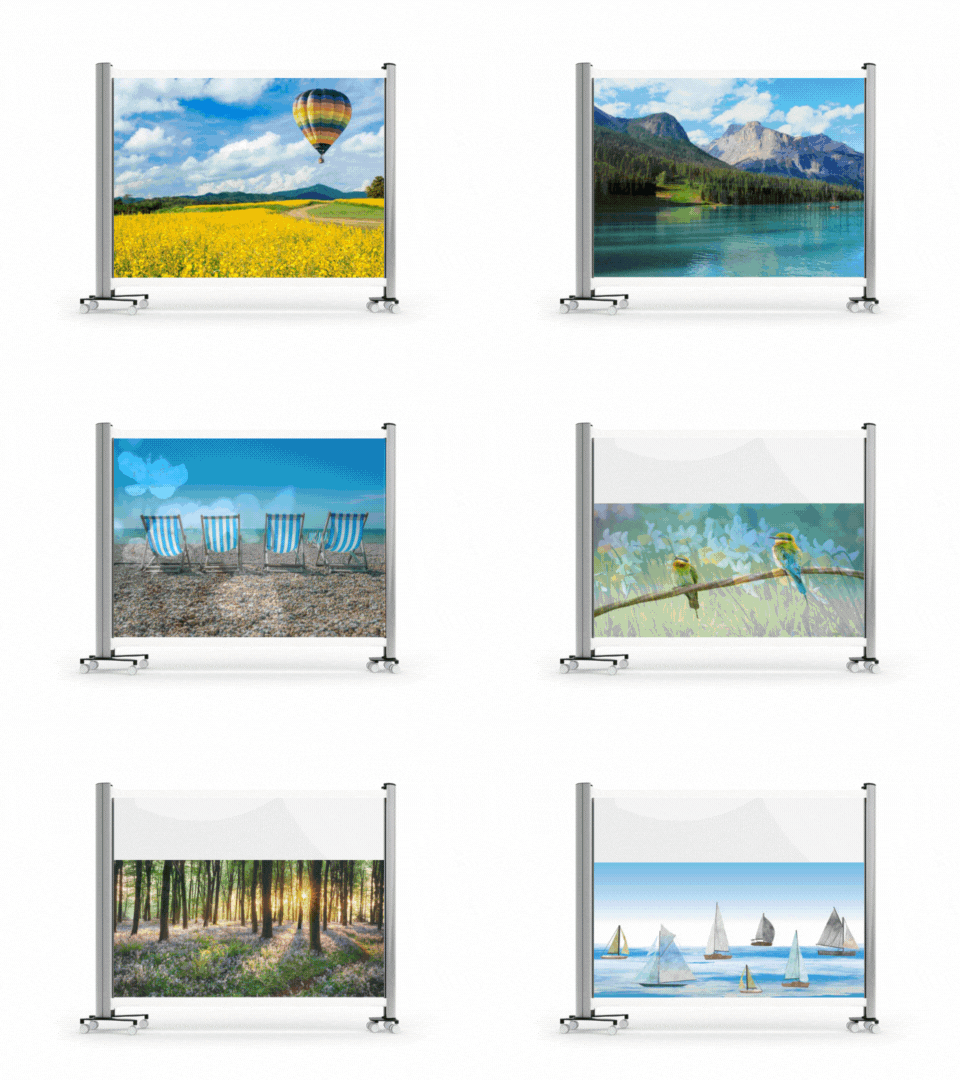
Print selection (PDF)
file size: 8.7 MB
PRINTING ON FLEXIBLE SCREENS
Choose the ideal print for your space. It can be full-surface or partial, with part of the screen allowing daylight to pass through, depending on where the screen will be placed. You can choose images from our catalog, but we can also use your own high-quality photos. Screens with white canvas can be printed on both sides, while transparent screens can only be printed on one side.

The influence of photos and images on seniors (PDF)
file size: 8.7 MB
THE IMPACT OF IMAGES ON SENIORS
Pictures and photos have a powerful positive impact on seniors with dementia, as they help stimulate memory, reduce anxiety, and improve orientation. Well-chosen photographs can be a bridge to memories, security, and a better quality of life for seniors with Alzheimer's disease.

FREQUENTLY ASKED QUESTIONS
1. What is a flexible screen?
A flexible screen is a variable element designed for quick and easy separation of space. It can be mobile or sliding (mounted on the wall), depending on the needs of the specific environment—for example, in hospitals, doctors' offices, or social services.
2. What are flexible screens most commonly used for?
They are used to create privacy around beds, for hygienic separation of spaces, to divide rooms, or for temporary zoning. They are used in hospitals, nursing homes, doctors' offices, and emergency rooms.
3. What is the difference between a sliding screen and a mobile screen?
A sliding screen is attached to the wall and can be pulled out to the side (180° range of motion). A mobile screen is free-standing and equipped with wheels for easy movement around the room.
4. Can the screens be cleaned and disinfected?
To ensure the long life and optimal quality of flexible screens, we recommend regular use of disinfectants designed for screens.
5. How is the screen installed?
It depends on the type – mobile screens just need to be unpacked and positioned. Sliding screens are mounted to the wall, which ensures their stability. We will be happy to arrange professional installation for you.
6. Can I fold the screen away when I don't need it?
Yes, the screens are designed to save space – when folded, the sliding wall can be easily pushed against the wall. Mobile screens can also be folded away.
7. What are the dimensions of the screens?
The height of the screens is either 160 or 190 cm, and the length can be 200 to 600 cm, depending on the type.
8. Can I use the screen outside of healthcare or social services environments?
Yes, the screens are also suitable for schools, offices, changing rooms, beauty salons, or events—anywhere you need to flexibly divide a space or ensure privacy.
9. What is the difference between a white and a transparent screen?
A white screen provides complete visual privacy and looks clean and professional. A transparent screen (clear or frosted) allows light to pass through, making it suitable for areas where it is necessary to maintain light, such as between beds or in shared rooms.
10. Can I choose a screen with a print?
Yes, we offer all screen models with decorative prints – for example, with plant, nature, or landscape motifs. The print adds a pleasant atmosphere to the space and helps to reduce its sterile appearance.
11. Does the print on the screen affect maintenance?
No, the print is applied to a washable surface and does not affect the possibility of disinfection. Screens with prints are just as hygienic as their unprinted counterparts.
12. How do I know which screen is right for me – white, clear, or printed?
It depends on the purpose of use. For maximum privacy, we recommend white solid screens. Transparent variants are ideal for light optical separation without loss of light. If you want to make the environment more cozy (e.g., children's ward, long-term care ward, or waiting room), then a printed screen is a good choice.
13. Can you help me choose the right screen?
Of course! Just write or call us – we will be happy to go through the options with you and recommend the ideal solution for your specific operation or space.
IMPORTANT INFORMATION:
The print may differ slightly from the graphic design. It is not possible to ensure a 1:1 print.
When printing on both sides of the screen, one print may show through the other slightly in sunlight.